![OFS_Circle.png]](https://support.ofsystems.com/hs-fs/hubfs/OFS_Circle.png?height=45&name=OFS_Circle.png)
Step 1 — Open Fusion Manager and go to the Reasons tab
Step 2 — Create a new reason and set its type to Planned Downtime
Give it a name, e.g. Lunch.
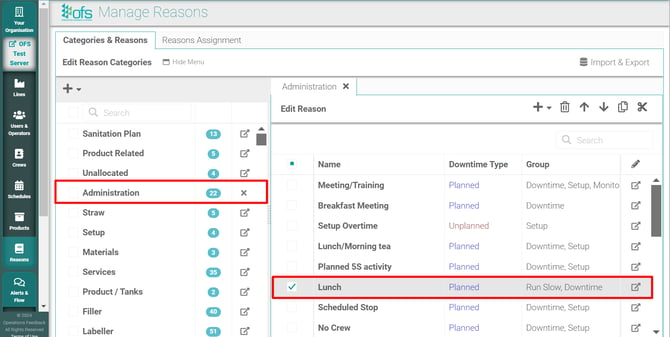
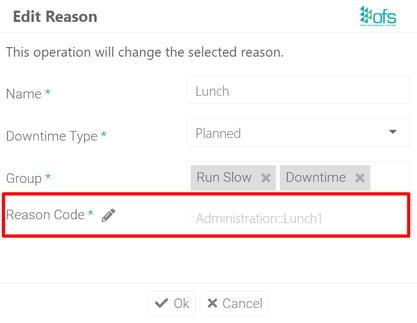
Step 3 — Note the Reason Code assigned to the reason
You'll need this in Step 9. The Reason Code is normally an auto-generated GUID — click the pencil icon next to it if you want to override it with something more readable, e.g. Administration::Lunch1.
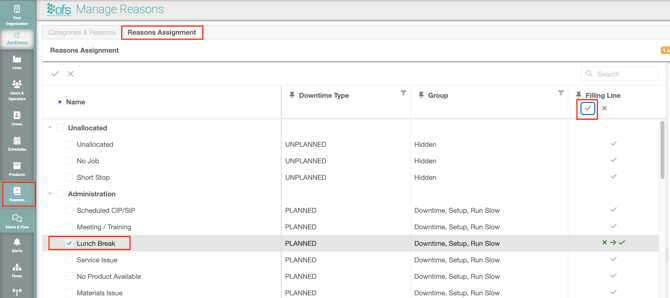
Step 4 — Assign the reason to the relevant line(s)
Go to Reasons Assignment and tick the reason for each line it should apply to.
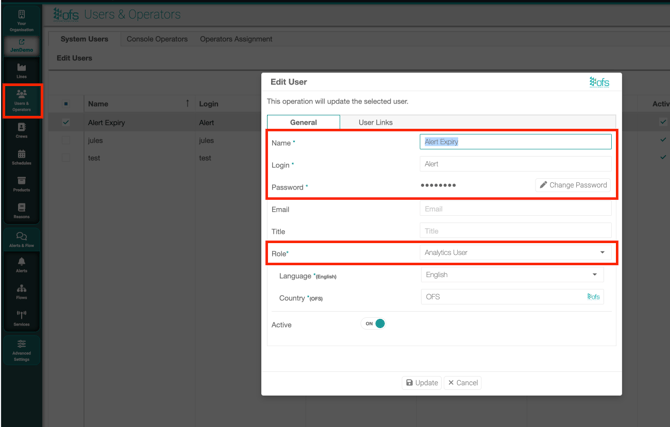
Step 5 — Go to Users & Operators and click Add User
Step 6 — Create a dedicated system user for this integration
This account authenticates the web service call in Step 10. Create one account and reuse it across all your scheduled downtime services, rather than creating a new one for each.
- Name — e.g.
Alerts - Login — e.g.
alerts - Password — set a strong password and record it; you'll need it in Step 10
- Role — Analytics User
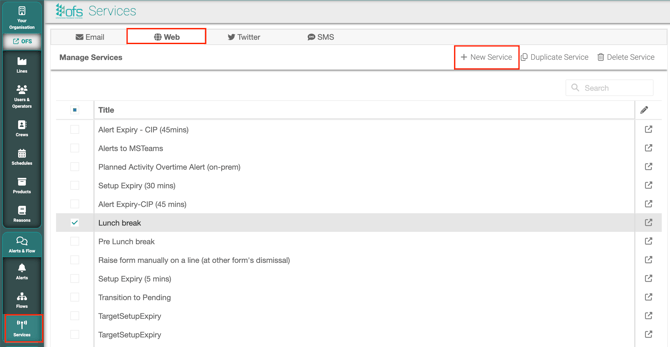
Step 7 — Go to Services and create a new Web service
You'll need one Web service for each downtime reason you want to schedule.
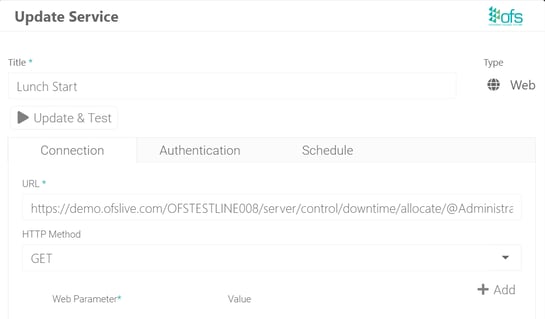
Step 8 — Name the service
Give it a clear name, e.g. Lunch Start.
Step 9 — Enter the downtime allocation URL
https://customer.ofsxpress.com/WorkcentreID/server/control/downtime/allocate/@reasoncodecustomer— your organisation's OFS subdomain (e.g.demo). If OFS is hosted on a local server, uselocalhostinstead.WorkcentreID— the line identifier (e.g.OFS001). Find this in Fusion Manager or in the console page's URL.
@reasoncode— the Reason Code from Step 3 (e.g.@Administration::Lunch1).
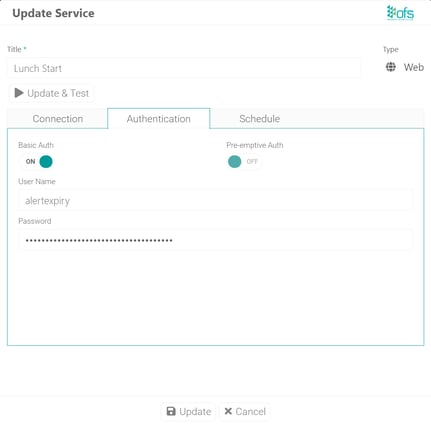
Step 10 — Enter the login credentials on the Authentication tab
Use the login and password for the user you created in Step 6.
Step 11 — Create an alert group
Under Alerts & Flow, create a group to hold your scheduled downtime alerts, e.g. Scheduled Downtime.
Step 12 — Create an alert inside the group
Fill in the alert's fields and click Save.
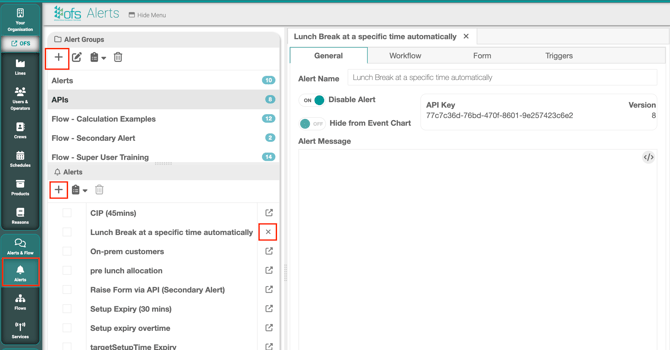
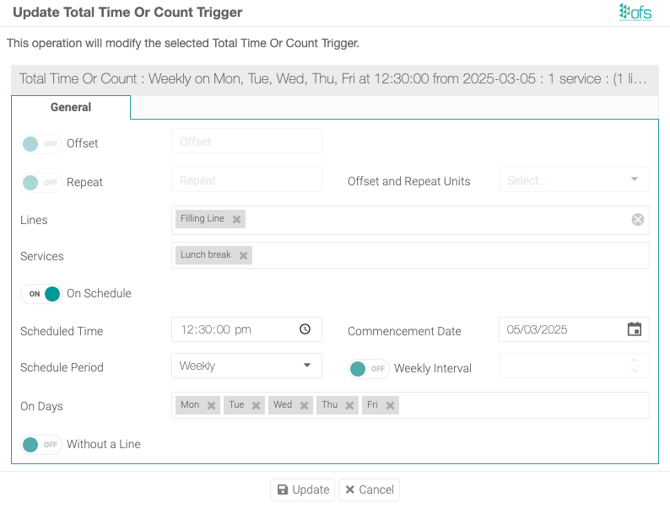
Step 13 — Create a new Total Time or Count trigger within the alert
Step 14 — Select the line(s) this trigger applies to
Step 15 — Select the Web service you created in Step 9
Step 16 — Toggle on On Schedule
Step 17 — Enter the time the downtime should start
For example, 12:00.
Step 18 — Select the date the schedule should begin
Step 19 — Select the repeat frequency
For example, Daily or Weekly.
Step 20 — Select the days of the week the trigger should fire
Step 21 — Click Update, then Save
Update stages the trigger; Save on the page commits it.